
The Philippine agricultural sector is crucial for providing livelihoods to millions of Filipinos and ensuring food security. It contributes around 9% to the country’s gross domestic product and employs approximately 18% of the workforce, particularly in rural areas.
However, this vital sector faces significant threats from large-scale smuggling, hoarding, profiteering, and other cartel-related activities that manipulate market prices and undermine fair competition. These illegal activities have caused severe economic losses. According to President Ferdinand Marcos Jr., the Philippines lost over PHP 3 billion to agricultural smuggling in 2023 alone. In less than nine months this year, over PHP 230 million worth of smuggled agricultural products were seized. Addressing these challenges is urgently needed to protect government revenue for social programs, safeguard farmers’ livelihoods, stabilize market prices, and ensure the long-term sustainability of the agricultural sector.
The recently signed Republic Act No. 12022, also known as the Anti-Agricultural Economic Sabotage (AES) Law, aims to protect farmers and fisherfolk from unscrupulous traders and importers, ensuring fair and affordable prices for agricultural and fishery products for consumers. The law also requires the establishment of a Daily Price Index, which will serve as a benchmark for identifying instances of economic sabotage. Moreover, it calls for the creation of implementing bodies, specifically the Anti-Agricultural Economic Council and the Anti-Agricultural Economic Sabotage Enforcement Group. The law signifies the government’s commitment to safeguard the country’s agricultural sector from malicious activities that threaten food security, economic stability, and the jobs and livelihoods of Filipinos.
While it is a critical piece of legislation, the law’s success depends on effective enforcement and inter-agency collaboration. With stricter penalties and enhanced enforcement mechanisms, this law provides the “teeth” needed to deter and penalize violators effectively.
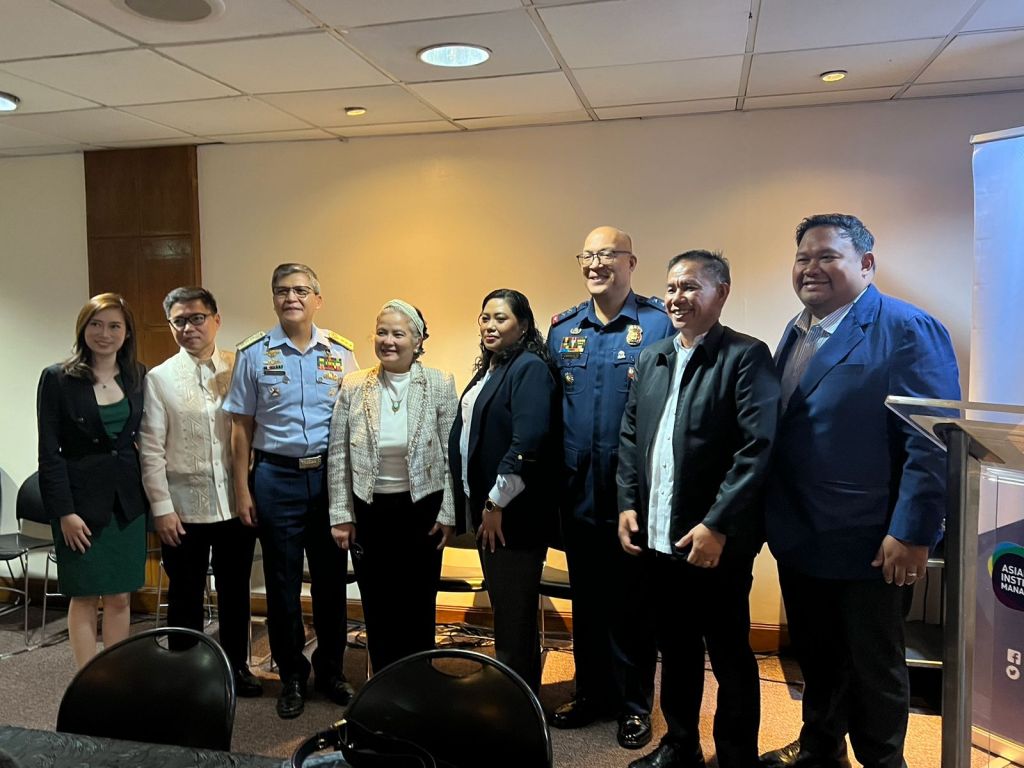
In this light, the Stratbase ADR Institute organized a panel discussion, entitled, “Strengthening Resilience for Food Security: Collaborative Strategies Against Agricultural Economic Sabotage,” on 3 December 2024 (Tuesday) from 9:00 AM-12:00 PM at JV Room 1 of the AIM Conference Center, Makati City.
This discussion identified enforcement gaps and strengthened response capabilities through improved inter-agency collaboration, resource sharing, and streamlined administrative processes to combat agricultural economic sabotage. Key focus areas include:
- Enhancing inter-agency collaboration to improve resource sharing and expertise;
- Streamlining administrative structures, such as assigning responsibility for organizing and overseeing regular council meetings;
- Establishing Daily Price Indices for agricultural commodities under the AES Law; and
- Developing agency action plans to effectively implement the AES Law.
Addressing large-scale smuggling, hoarding, profiteering, and cartel activities requires a multi-faceted approach that includes strengthening national policies, enhancing inter-agency collaboration, improving enforcement mechanisms, and fostering engagement between government stakeholders—particularly regulators and law enforcers—and other key groups, such as farmers and consumers. By implementing a comprehensive strategy grounded in transparency, accountability, and inclusivity, the impact of illicit activities on public revenue, food security, and the economy can be mitigated, ultimately contributing to a safer and more secure society and ensuring stable access to affordable food for all.


 Stratbase Institute