
The rapid integration of emerging technologies has transformed industries and accelerated digital transformation in the Philippines and beyond. This shift has driven unprecedented economic growth, improved public service delivery, and enhanced connectivity across various sectors. However, alongside these advancements, there is an alarming rise in cybersecurity risks that threaten critical information infrastructure, national security, and the integrity of democratic institutions.
As the Indo-Pacific becomes more digitally interconnected, it is also becoming a hotbed for cyber warfare, driven by ongoing geopolitical tensions, particularly in key territories such as the West Philippine Sea. State and non-state actors are exploiting emerging technologies to conduct cyber intrusions, data breaches, and digital espionage, aiming not only to disrupt operations of both the public and the private sector, but also to influence public opinion and gain support for a particular narrative.
The Philippines, despite its improvements in the Global Cybersecurity Index, continues to grapple with a growing wave of cyber threats. Malicious actors, leveraging the latest advancements in artificial intelligence and Internet-of-Things, are becoming increasingly adept at launching sophisticated cyber-attacks. These threats pose significant risks to critical infrastructure, including telecommunication, financial systems, and more importantly, government databases, which could lead to severe disruptions across the bureaucracy and the economy. Additionally, with the upcoming 2025 midterm elections on the horizon, there is growing concern that the Philippines will face an increased interference from external forces, along with a surge in AI-enhanced disinformation. Deepfake videos, fake news, and coordinated social media campaigns could be used to influence public opinion, sway voters, discredit candidates, and delegitimize the electoral process. This underscores the urgent need for a multi-faceted approach to cybersecurity that not only strengthens technological defenses but also enhances the resilience of society against digital manipulation.
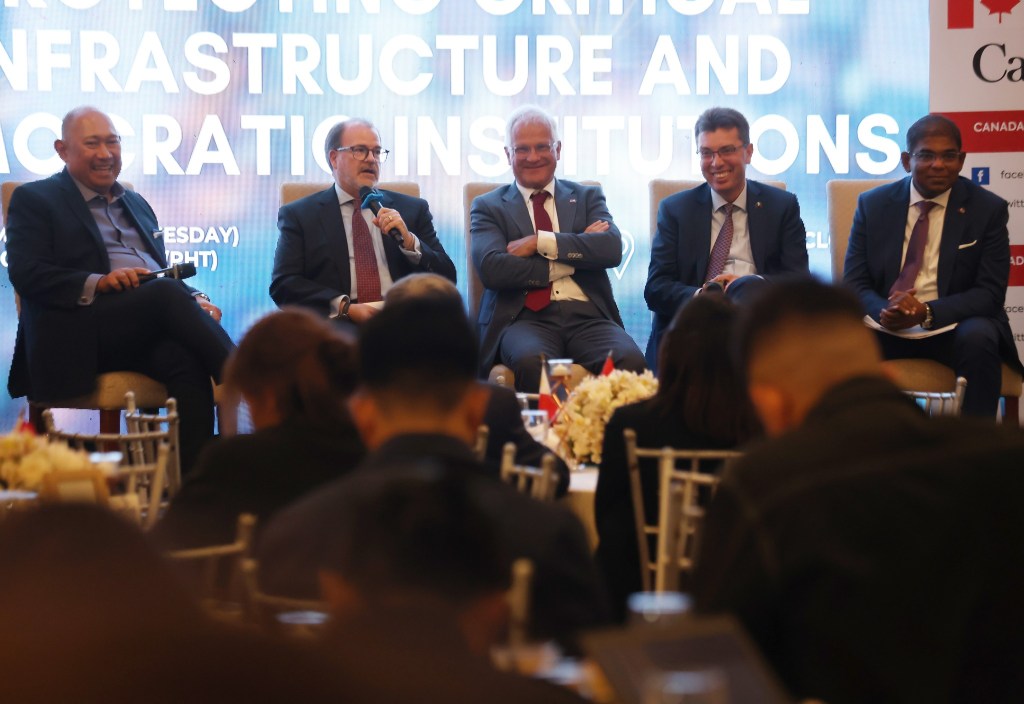
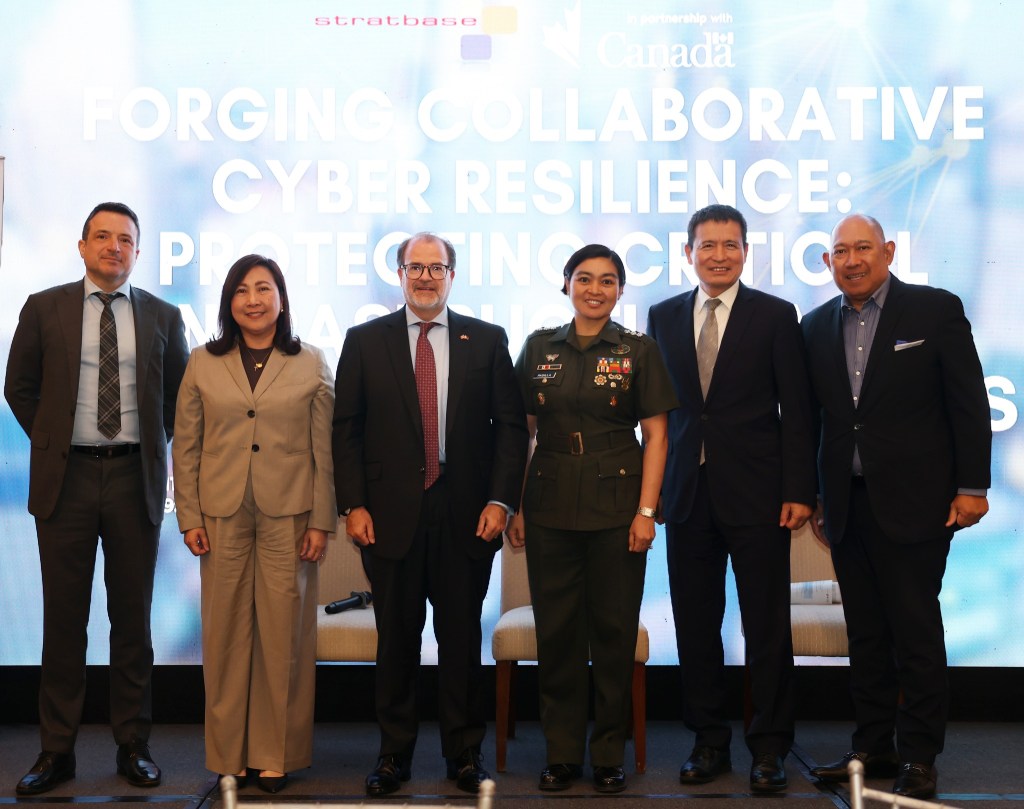
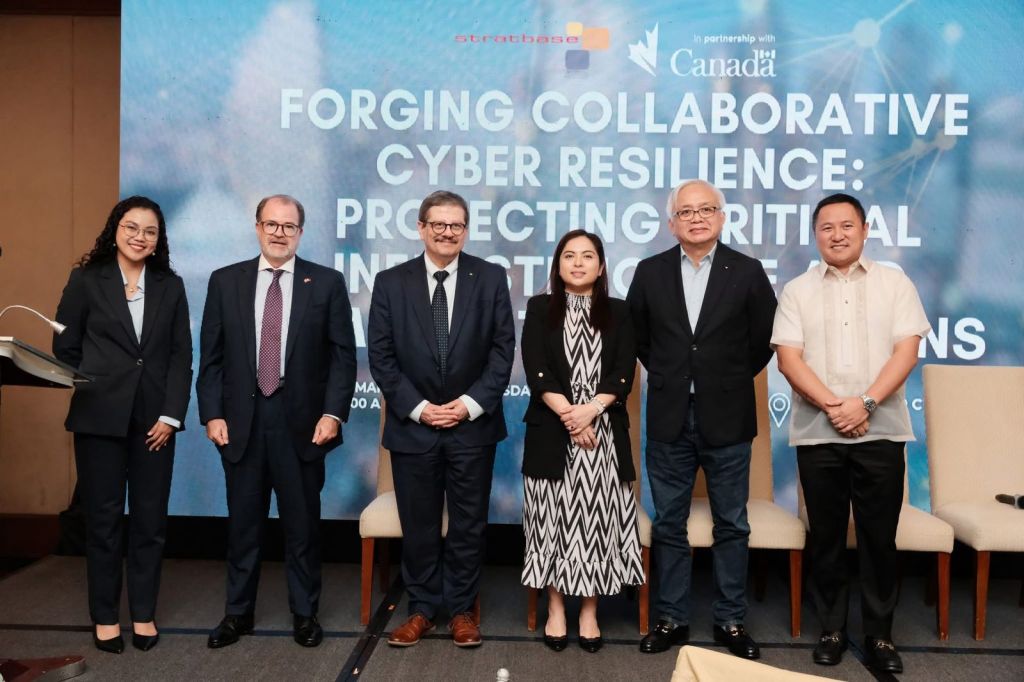
With this, the Stratbase Institute, in collaboration with the Embassy of Canada in the Philippines, organized a two-day conference entitled, “Forging Collaborative Cyber Resilience: Protecting Critical Infrastructure and Democratic Institutions.” This was held on March 11-12, 2025, at the Turf Room, Manila Polo Club, Makati City, from 9:00 AM – 5:00 PM. The conference brought together key stakeholders from government, the private sector, academia, media, civil society, and the international community to address the escalating cyber threats and develop strategies to protect critical infrastructure and democratic processes.
The first day focused on assessing current cyber threats and their impact on national security. Discussions explored the growing utilization of cyberspace as an arena for malicious actors to execute their disruptive tactics. It also discussed the importance of prioritizing landscape threat assessment across critical assets in pursuit of developing a more comprehensive cybersecurity measure. Experts from various sectors shared insights into the best practices for securing critical infrastructure, leveraging international partnerships, and enhancing the country’s cyber resilience.
The second day shifted focus to the urgent issue of disinformation and election security ahead of the 2025 midterm elections. Stakeholders discussed strategies to detect and mitigate the impact of deepfakes and false narratives, emphasizing the role of media, civil society, and technology providers in maintaining a healthy digital environment. These discussions fostered a comprehensive strategy to safeguard not just the integrity of elections but also the broader information ecosystem in the Philippines.




 Stratbase Institute