
The United States remains the Philippines’ oldest and only treaty ally. While the Marcos Jr. Administration has actively pursued a foreign and defense policy anchored in strengthening ties with other like-minded partners, its relationship with the United States remains central to the country’s overall defense posture.
Over the years, the alliance has made significant strides in deepening defense cooperation and advancing credible deterrence. This has been achieved by expanding the scale of joint military exercises—most notably through the most comprehensive iteration of Balikatan to date—deploying advanced military assets, supporting the modernization of the Armed Forces of the Philippines, and investing in defense infrastructure.
Most recently, President Marcos Jr. undertook an official state visit to the United States, where he met with President Donald Trump. During their meeting, President Trump reaffirmed the U.S. government’s commitment to strengthening its defense cooperation with the Philippines.
With the Indo-Pacific identified as the United States’ priority theater, the Philippines—strategically located at the heart of the region—stands as a vital partner in advancing shared interests. Amid heightened aggression in the West Philippine Sea and the broader South China Sea, President Trump’s emphasis on promoting credible deterrence under his “peace through strength” agenda is particularly critical for both the Philippines and the United States.
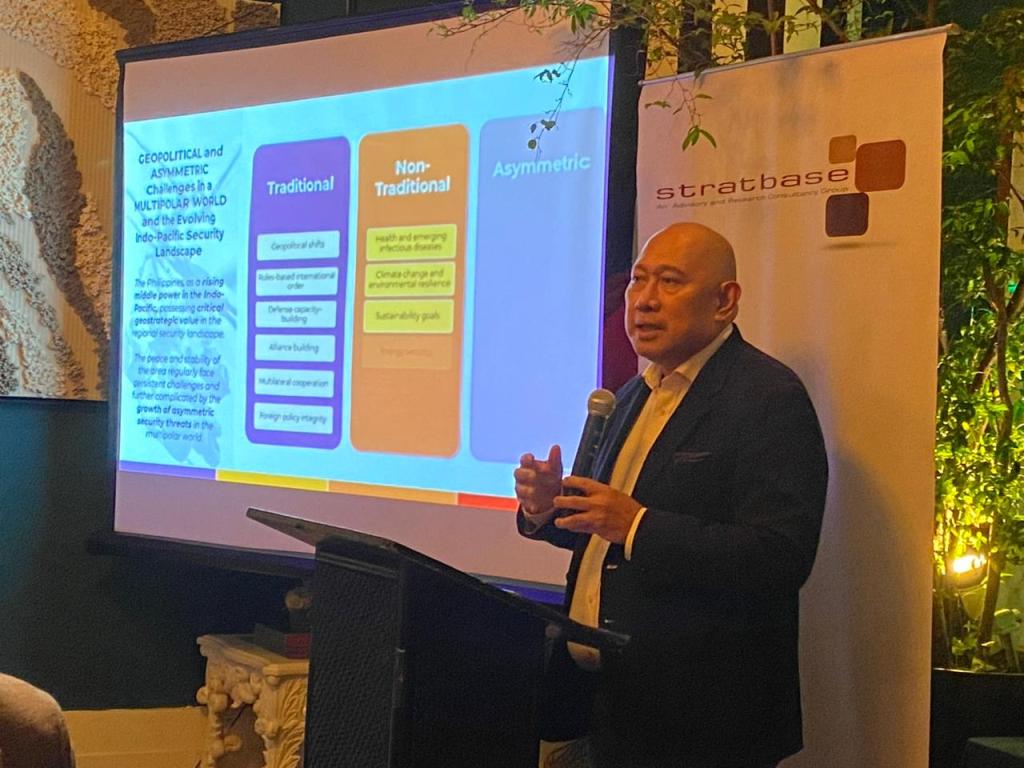
In line with these developments, the Stratbase Institute, in partnership with The Heritage Foundation, organized a roundtable discussion entitled “Prospects for the Philippines–United States Alliance in a Complex Geopolitical Landscape,” on August 12, 2025 (Tuesday) from 9:00 AM to 11:00 AM at Rizal Room, Manila House Private Club, BGC, Taguig City.
The event brought together experts from The Heritage Foundation, the author of Project 2025, along with government officials, members of the security sector, and the academe for a discussion to assess recent developments and explore pathways for enhanced Philippines–United States cooperation amid an increasingly complex regional environment.


 Stratbase Institute