
In both Europe and the Indo-Pacific region, traditional and grey zone security challenges are becoming increasingly pronounced. Military build-ups are accelerating, dual-use technologies are heightening unpredictability, and economic and legal instruments are being used to blur the lines between war and peace.
Notably, these regions are flashpoints for ongoing crises: the war in Ukraine and escalating tensions in the South China Sea, particularly in the West Philippine Sea. Ukraine continues to face targeted attacks on critical infrastructure and the growing use of advanced technologies such as drones and satellite systems. Meanwhile, the Indo-Pacific is grappling with gray zone tactics and malign influence operations that threaten regional stability.
As Europe and Indo-Pacific countries navigate a complex regional landscape, the need for deeper dialogue with partners has never been more urgent. These shared challenges underscore the pressing need for strategic partnerships and strengthened cross-regional cooperation.
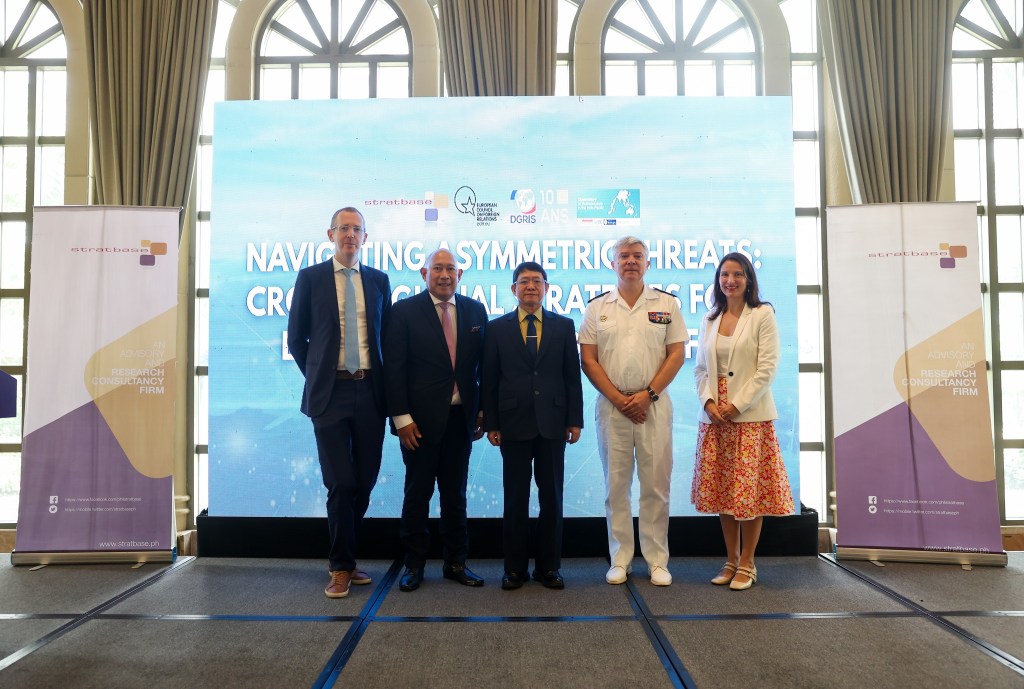
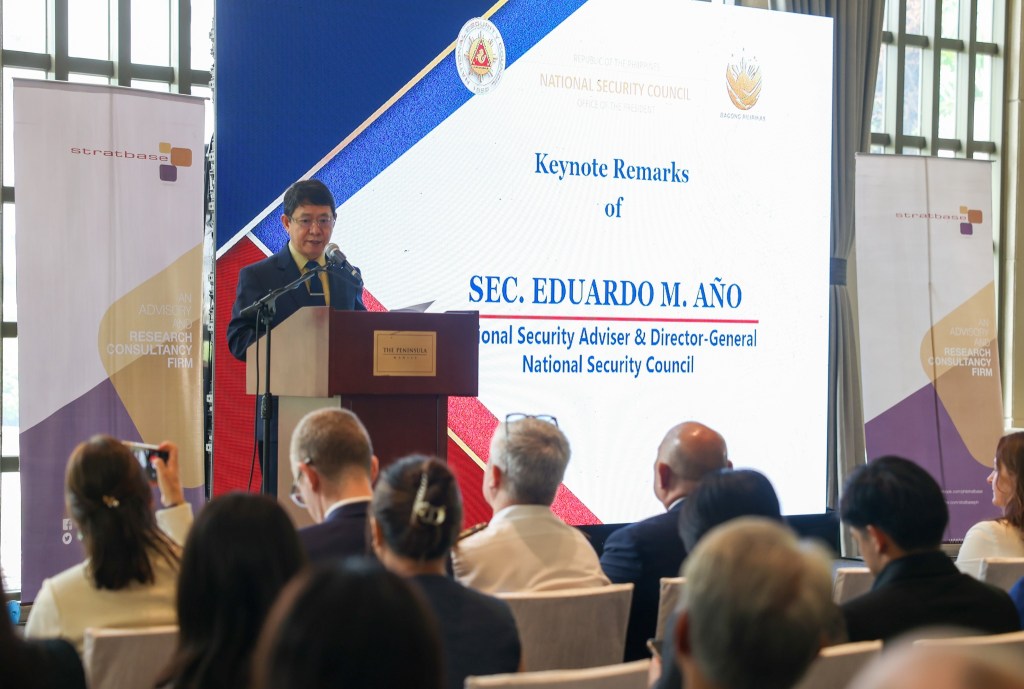
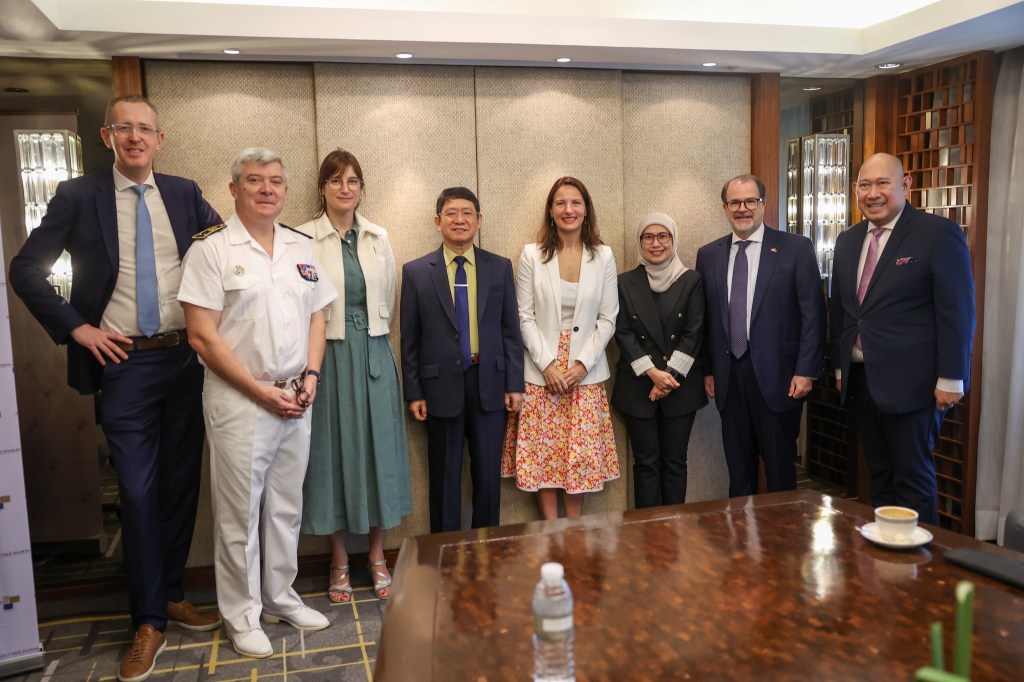
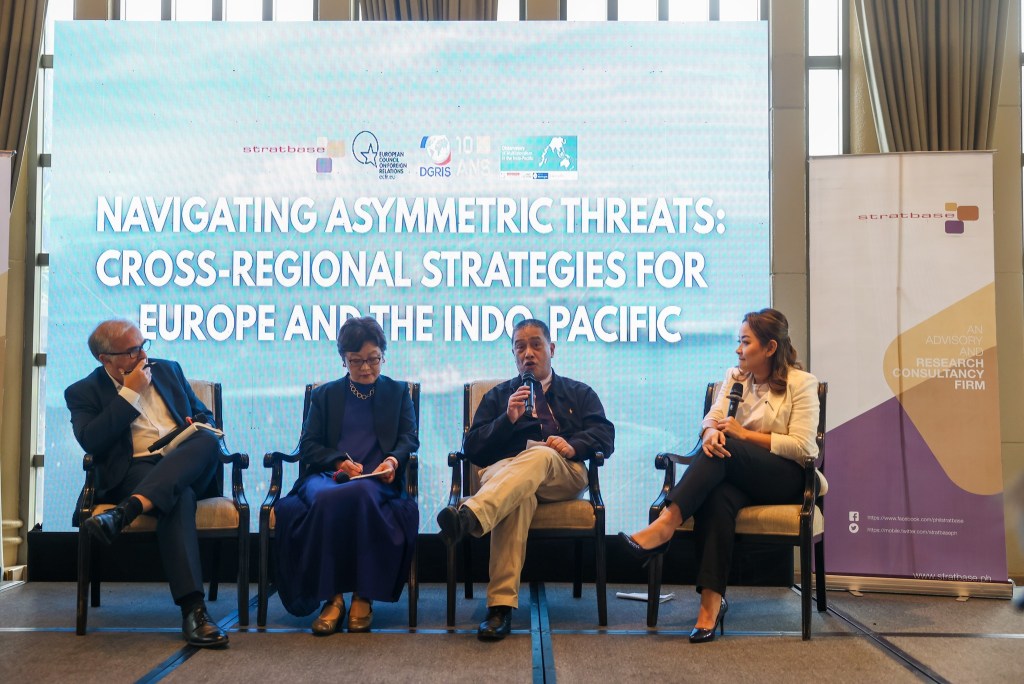
In response to these realities, the Stratbase Institute, in partnership with the European Council on Foreign Relations, hosted a forum entitled “Navigating Asymmetric Threats: Cross-Regional Strategies for Europe and the Indo-Pacific” on 18 September 2025 (Thursday), from 9:00 AM to 4:30 PM (PST), at The Conservatory, The Peninsula Manila, Makati City. The event brought together security experts, along with representatives from the government, military, academia, and diplomatic community from Europe and the Indo-Pacific region for a discussion aimed at improving joint responses, fostering greater trust, and enhancing situational awareness in theaters increasingly shaped by asymmetric threats.
This event was part of the “Observatory of Multilateralism in the Indo-Pacific,” a multi-year research program led by the Foundation for Strategic Research in cooperation with the European Council on Foreign Relations, the Institut Montaigne, the Center for International Studies of Sciences Po, and the National Institute for Oriental Languages and Civilizations. Conducted with the support of the French Ministry of the Armed Forces, it aimed to contribute to a better understanding of Indo-Pacific issues in Europe.




 Stratbase Institute