
The Indo-Pacific is a strategic maritime space, home to crucial sea lanes, rich biodiversity, and a growing blue economy. Yet it faces increasingly complex and interconnected challenges—from overfishing and plastic pollution to the necessity of ensuring freedom of navigation—making the call for stronger maritime governance more urgent than ever.
Sustainable governance of these waters requires more than state-led action. It demands the active participation of civil society, academia, the private sector, local communities, and international partners working together to safeguard the maritime commons.
The 2025 UN Ocean Conference, co-chaired by France and Costa Rica, and hosted in Nice last June, exemplifies this approach by convening governments, civil society, the private sector, and international organizations to advance sustainable ocean governance. Such initiatives highlight the power of collaborative action in building resilience and shared responsibility for the seas.
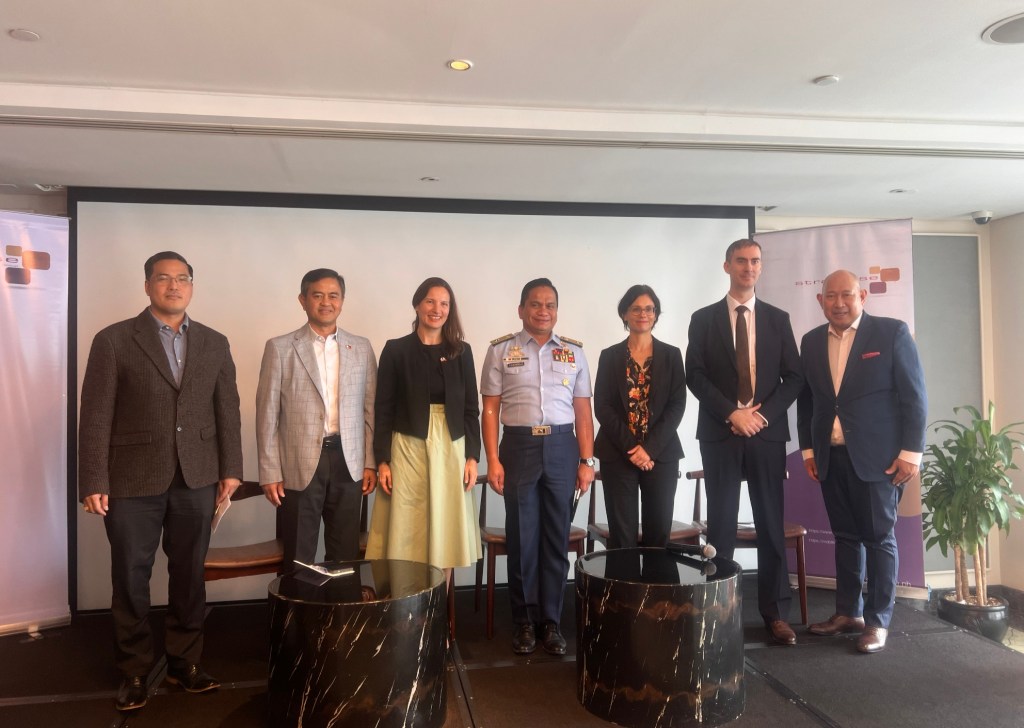
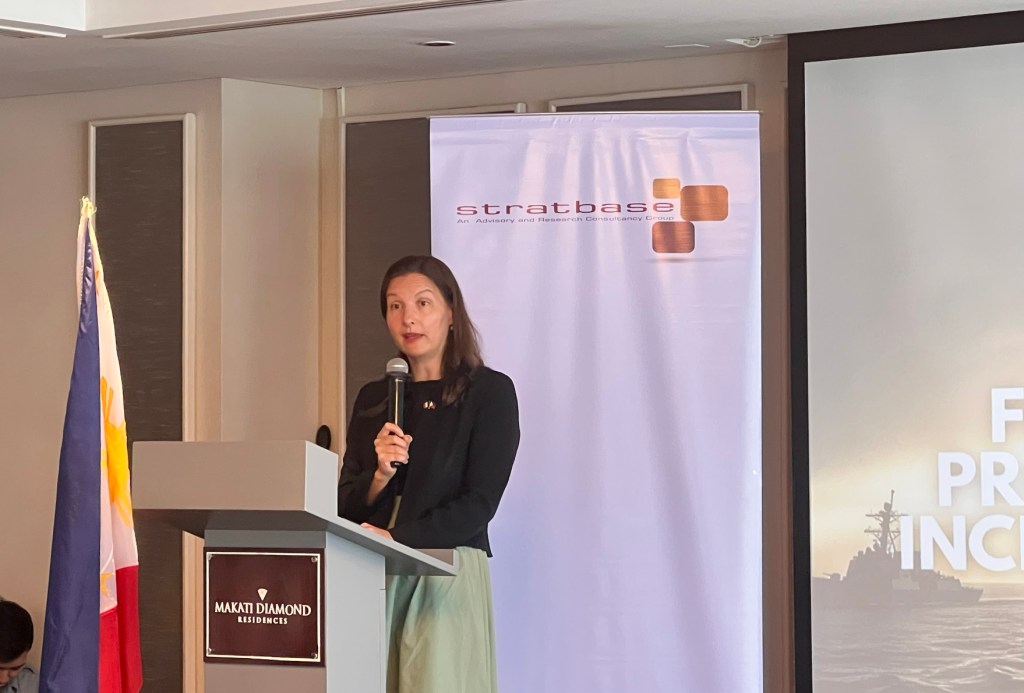
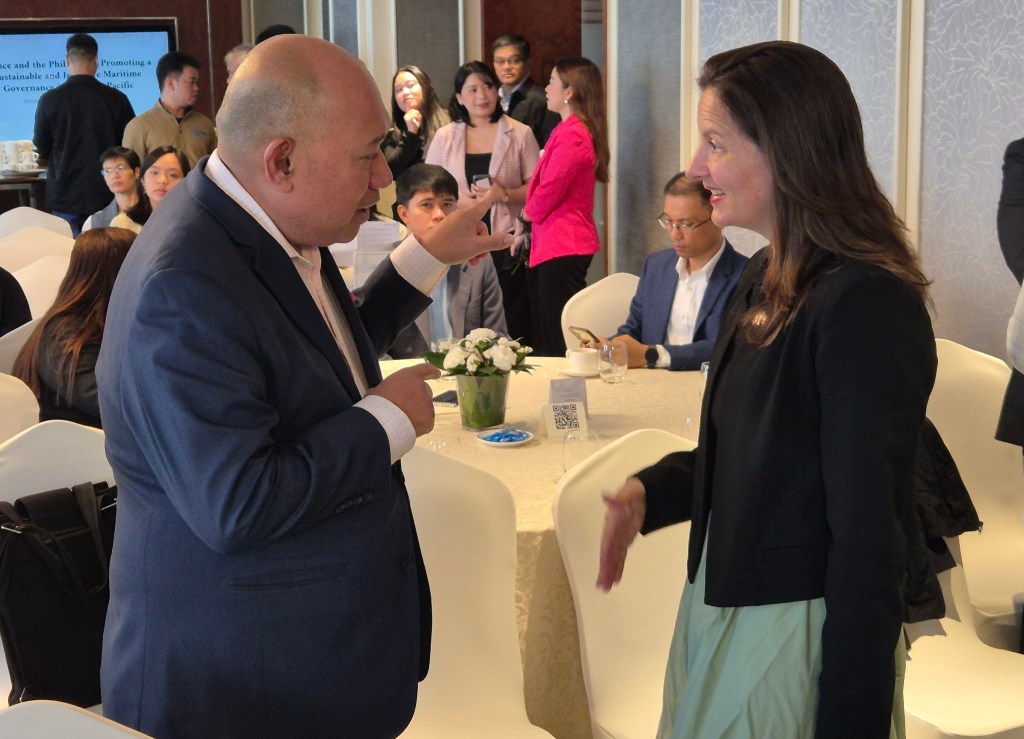
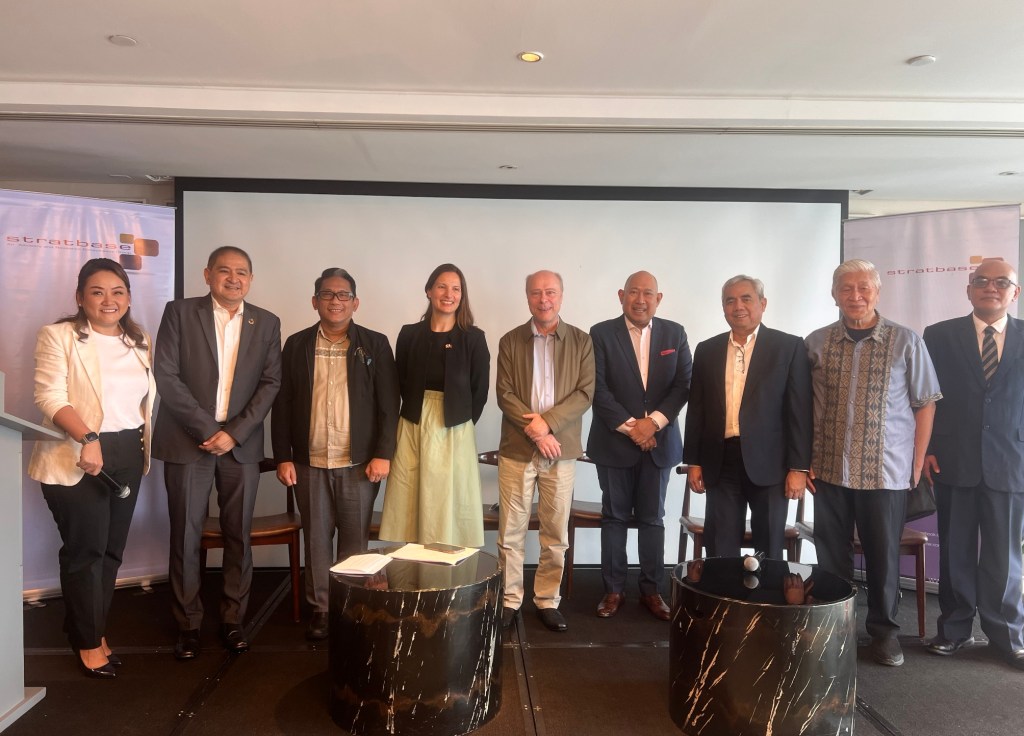
In this context, and as part of the “Blue Nations: France and the Philippines, Partners for the Oceans” Initiative, the Stratbase Institute, in partnership with the Embassy of France in the Philippines, hosted the fifth installment of the Blue Talks series, entitled “France and the Philippines: Promoting a Sustainable and Inclusive Maritime Governance in the Indo-Pacific.” The event took place on October 16, 2025 (Thursday), from 8:30 AM to 1:00 PM (PHT) at the Makati Diamond Residences, Makati City.
This event explored concrete pathways for whole-of-society approach to maritime governance in the Indo-Pacific, showcasing innovative collaborations, lessons learned, and opportunities for increased partnerships including successful examples of Philippines–France cooperation. It convened key stakeholders from the government, diplomatic community, civil society, academe, and private sector to ensure that maritime governance is inclusive, sustainable, and supportive of a free and open Indo-Pacific.
 Stratbase Institute