
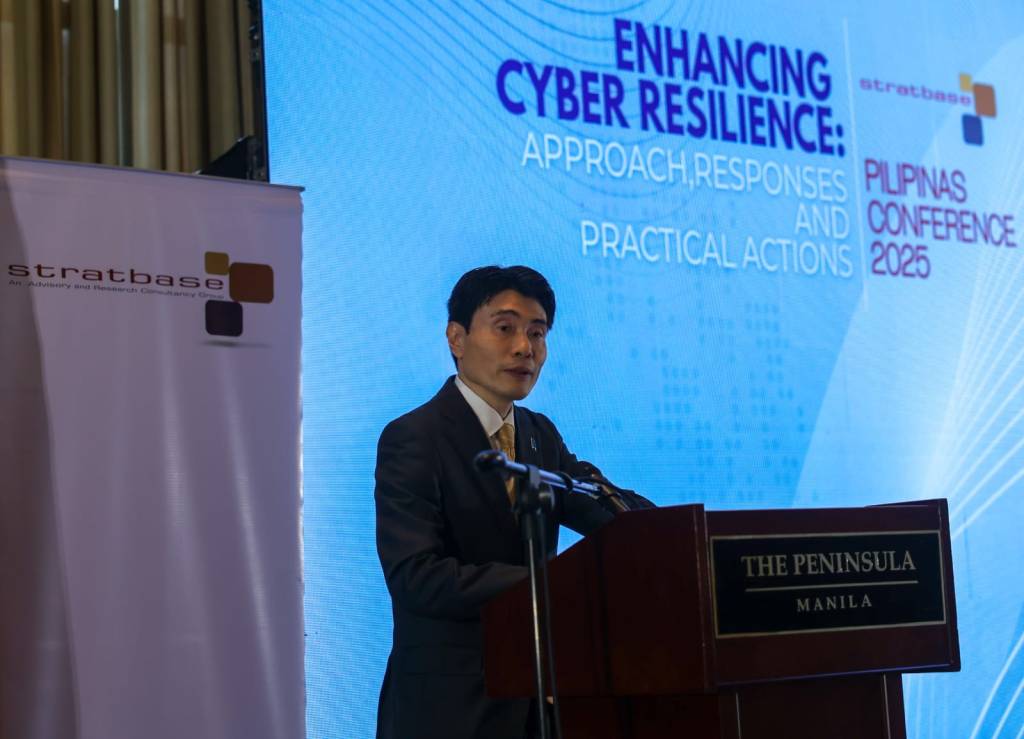
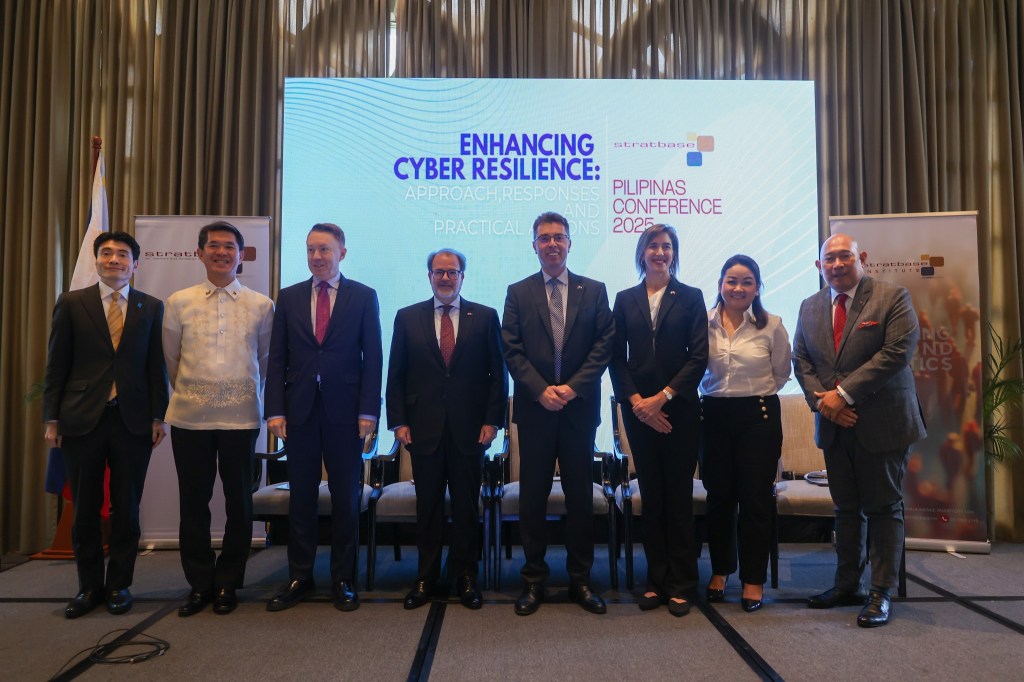
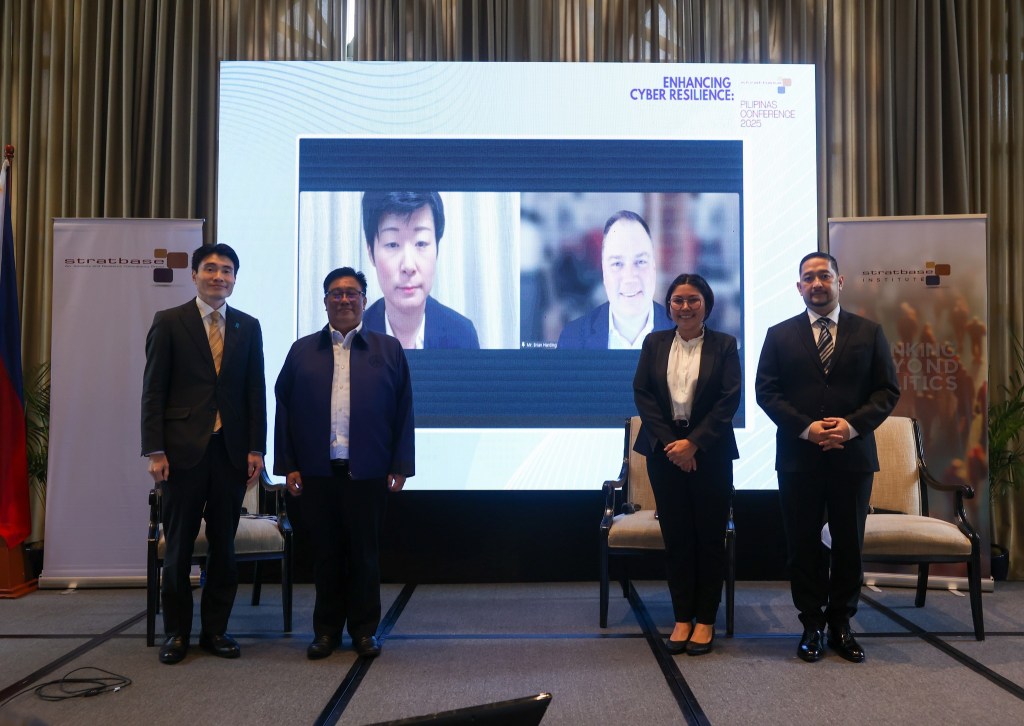
The Stratbase Institute organized the first day of its annual Pilipinas Conference, titled “Enhancing Cyber Resilience: Approach, Responses, and Practical Actions,” held at the Peninsula Manila Hotel in Makati City.
In his remarks, Prof. Dindo Manhit recognized the rapidly evolving cyber threats that are becoming faster and more coordinated, with impacts rippling across the Indo-Pacific. He emphasized that cyber defense has moved beyond a purely technical concern and is now a vital pillar of national stability—one that demands a comprehensive and strategic approach. He underscored the need for robust partnerships among governments, the private sector, and international allies to strengthen intelligence sharing, coordinate responses, and build collective resilience.
In his keynote address, Department of Information and Communications Technology Secretary Henry Aguda highlighted the Philippines’ potential to become a prime hyperscaler hub in Asia and its ambition to achieve hyperexponential digital-economy growth, targeting a 12.5% trajectory by 2028. He stressed that digitalization is ultimately built on trust and urged cybersecurity leaders and innovators to invest, integrate, and align with the Philippines in safeguarding the nation’s shared economic future.
His Excellency Ambassador Endo Kazuya, Ambassador of Japan to the Philippines, underscored that as cyber threats take increasingly varied forms, addressing them swiftly and effectively has become an urgent priority for the international community—requiring collective action and shared responsibility. He called on cybersecurity stakeholders from like-minded nations to strengthen cooperation, enhance resilience, and ensure that the digital domain remains secure, stable, and open for all.
Echoing this, Mr. Takeomi Yamamoto, Director of the National Security Policy Division of the Foreign Policy Bureau of the Ministry of Foreign Affairs of Japan, emphasized that cyberspace and cyberattacks have no borders. A single point of vulnerability in one country or region can trigger wider risks for the entire international community, which is why cooperation in the cyber domain is a key element.
The Institute expresses its gratitude to all speakers, moderators, and partners for an insightful discussion. The Institute continues to advocate that cybersecurity is national security. Protecting the digital domain is a shared responsibility of the state, the private sector, and the international community.





 Stratbase Institute