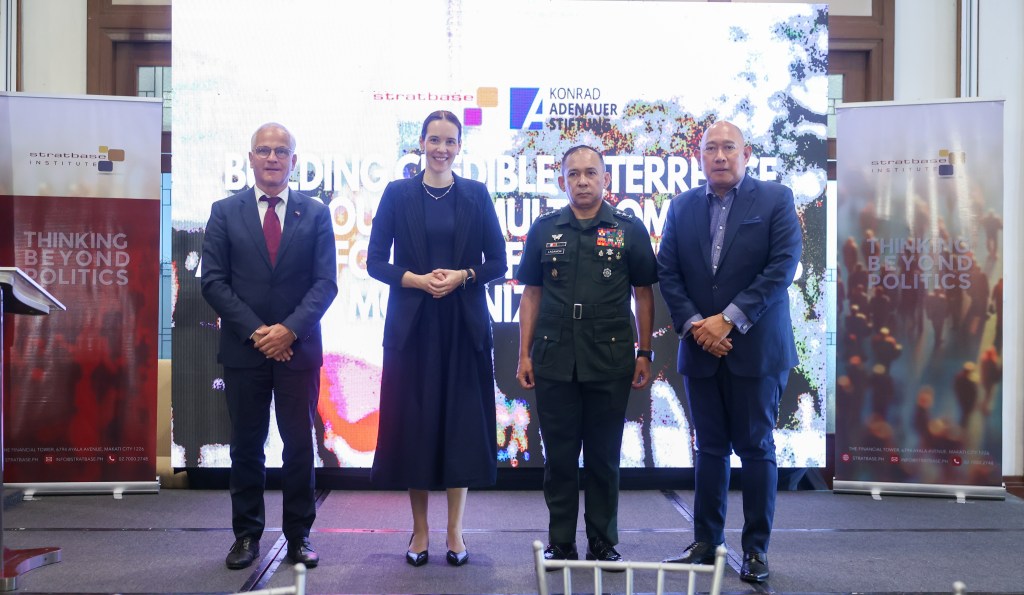
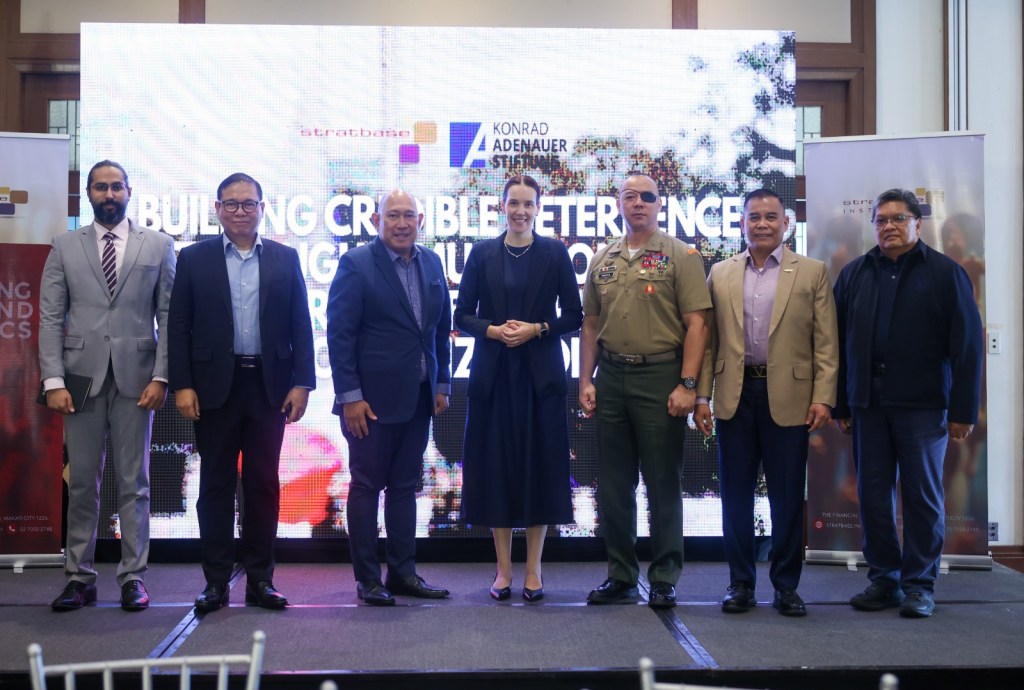
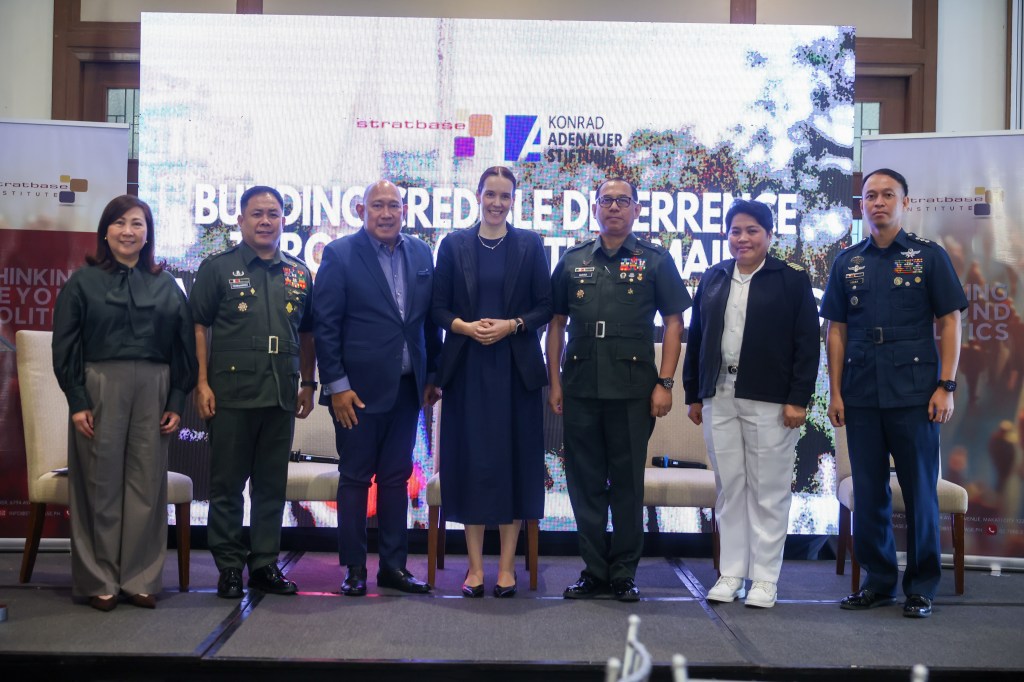
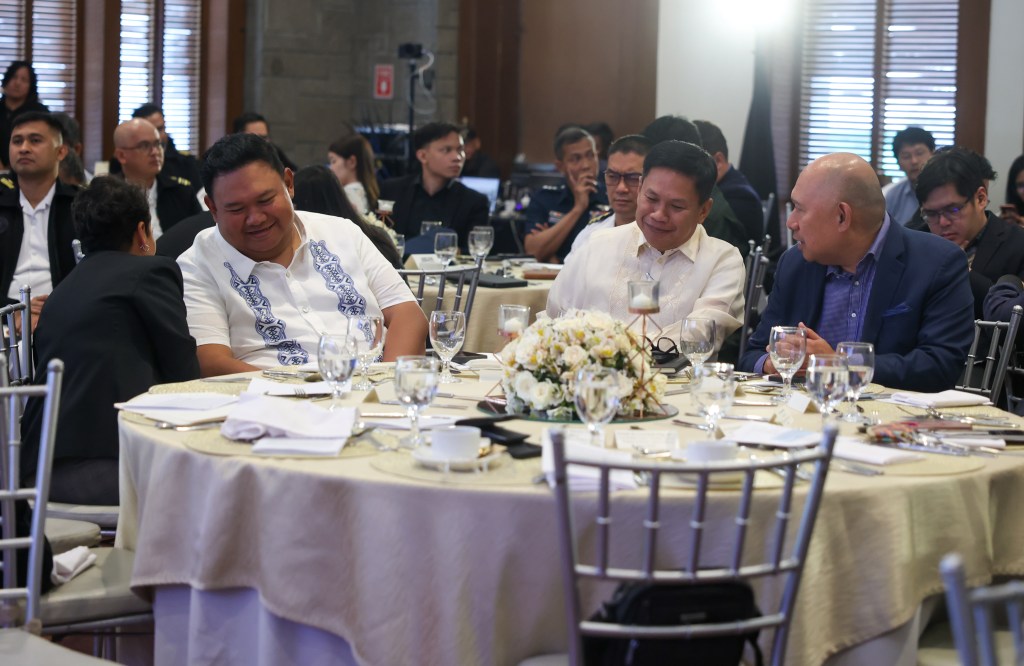
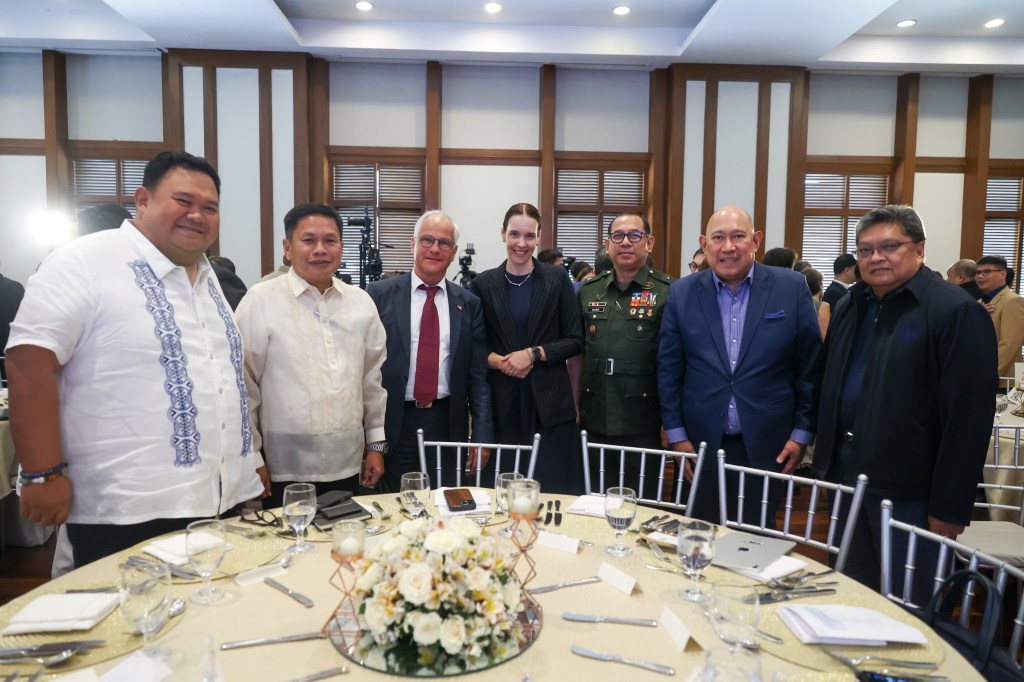
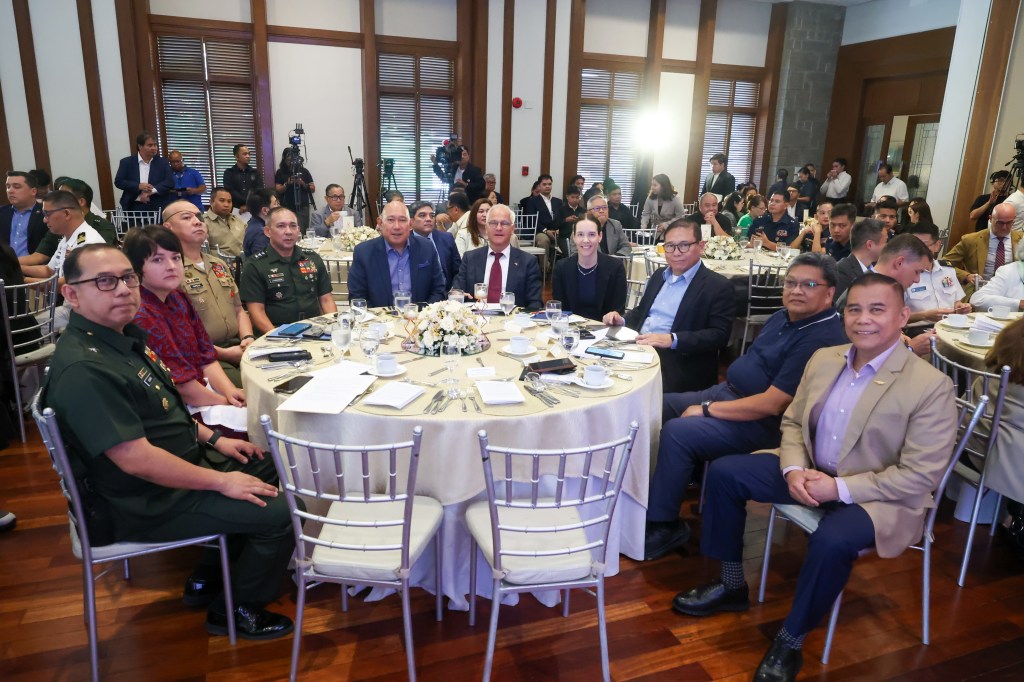
In partnership with the Konrad-Adenauer-Stiftung (KAS) Philippines, the Stratbase Institute organized a forum entitled “Building Credible Deterrence Through a Multi-Domain Armed Forces of the Philippines Modernization,” at the Manila Polo Club, Makati City. The forum brought together representatives from the government, military, academe, private sector, and diplomatic community for a discussion on strengthening the country’s defense capabilities through multi-domain modernization.
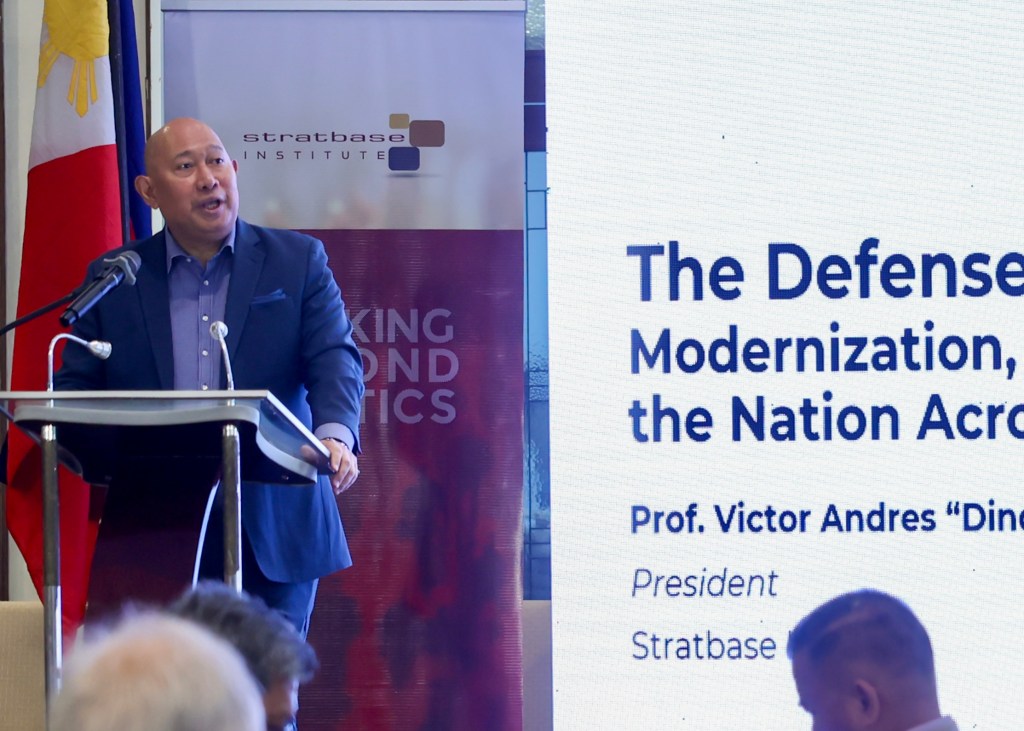
In his opening remarks, Stratbase Institute President Prof. Dindo Manhit emphasized that for the Philippines to defend its rights, especially those affirmed by the 2016 Arbitral Award, there is a need for a modern, multi-domain Armed Forces of the Philippines that can deter, detect, and respond to threats across land, maritime, air, cyber, and other unexplored but crucial domains such as underwater. He further stressed that the country cannot achieve its modernization goals alone and that defense cooperation with like-minded nations, especially through established defense agreements, will be vital in realizing this vision.
Echoing this, His Excellency Dr. Andreas Michael Pfaffernoschke, Ambassador of the Federal Republic of Germany to the Philippines, highlighted in his keynote address that modernizing armed forces cannot be achieved in isolation. He underscored the growing bilateral defense relationship between Germany and the Philippines, anchored by the recently ratified Defense Cooperation Agreement, and expressed his strong desire to begin negotiations for a Visiting Forces Agreement that would enable deeper and more robust collaboration between the two countries’ armed forces.
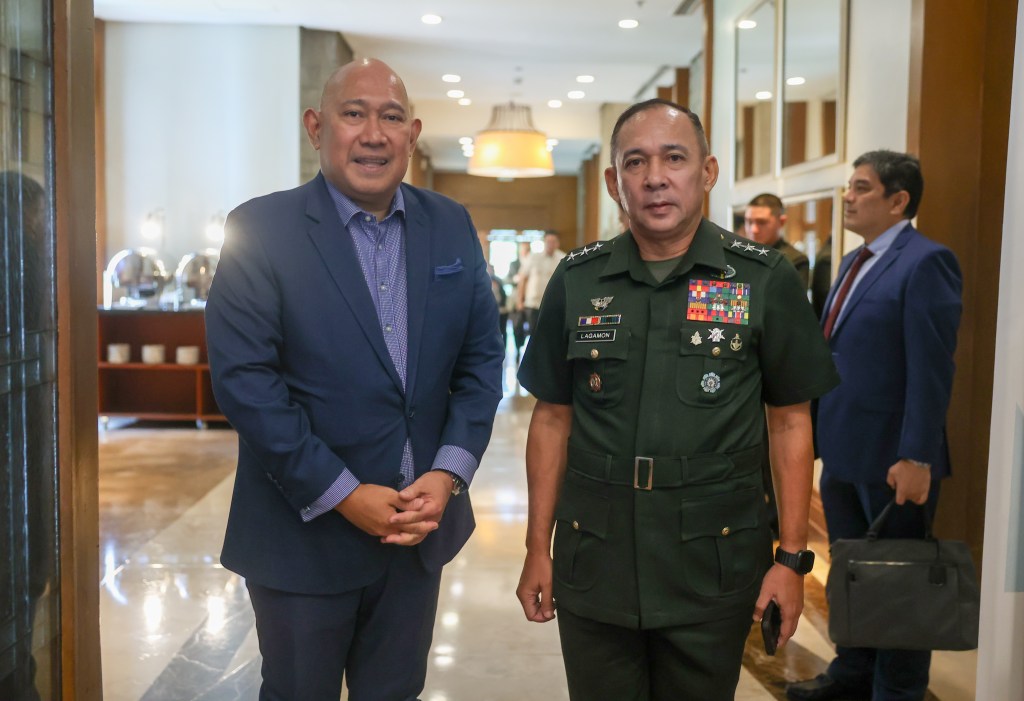
In his keynote address, delivered by Acting Deputy Chief of Staff and Commander of the Civil-Military Operations Command Lt. Gen. Arvin Lagamon, Armed Forces of the Philippines Chief of Staff Gen. Romeo Brawner Jr. stressed that credible deterrence is built on capability, readiness, interoperability, national resolve, and the demonstrated ability to operate effectively across multiple domains. He expressed the AFP’s commitment to building a multi-domain force prepared not only to confront current challenges, but also to secure the nation’s future and contribute to a free, open, stable, and rules-based Indo-Pacific.
Lastly, KAS Philippines Country Director Ms. Daniela Braun emphasized the importance of discussing defense modernization not only in the Philippines, but also across Europe, including Germany. She underscored the value of continued dialogue and informed public debate in today’s rapidly changing security environment.
Stratbase Institute expresses its gratitude to the speakers and moderators for sharing their valuable insights and expertise. The Institute looks forward to supporting the continued transformation of the AFP and remains committed to fostering partnerships with like-minded states to strengthen regional security cooperation.