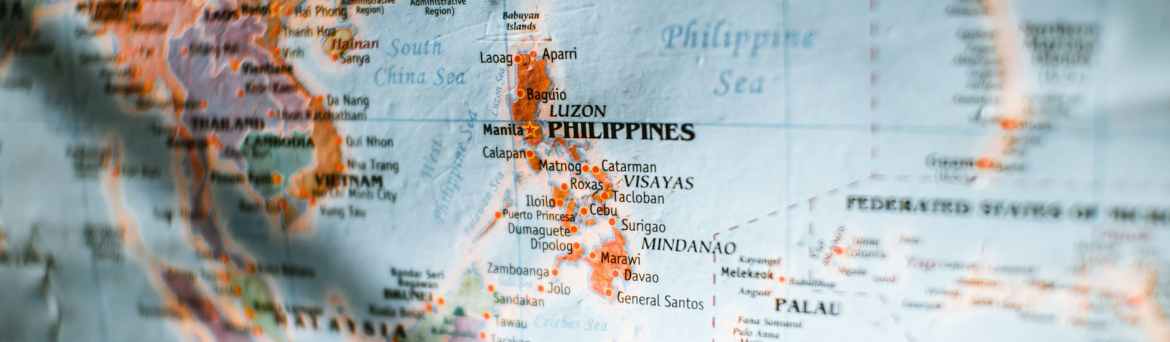
Risks and prospects for PH foreign policy

Russia’s invasion of Ukraine demonstrates how violent conflicts wreak havoc on the international system and undermine the global economy. Heightened geopolitical risks from such security challenges have continued to affect governments, businesses, and communities worldwide. The far-reaching implications are instructive of the essential roles of diplomacy and multilateral cooperation in ensuring long-term security and prosperity. Hence, a renewed definition and understanding of cooperation and strategic partnership among states to collectively solve conflicts and other security challenges have become more significant. Read More

ADRi vTHD: “Impactful Governance Reforms for the Next Administration”

The Philippines enjoys an abundance of areas which would benefit from significant, structural reform. There is a long list of governmental and societal problems which have largely remained unaddressed for several decades. Issues of generational poverty, corruption, and infrastructural stagnation are some key concerns. In light of these pressing challenges, but limited resources and political will, one is forced to consider which reforms should be given priority. Which reforms can generate high-impact, effective changes?  Read More

Addressing China’s gray zone operations through Philippines’ civil-maritime agencies

On April 17, 2012, the commanding general of the Armed Forces of the Philippines (AFP) Northern Luzon Command, Lieutenant General Anthony Alcantara, announced that the Philippine Coast Guard (PCG) is replacing its lone patrol craft the BRP EDSA II with the BRP Pampanga during an intense stand-off with two China Maritime Surveillance (CSMU) ships off Scarborough Shoal. This dangerous maritime incident between China and the Philippines began on April 10 when the Philippine Navy (PN) dispatched its flagship, the BRP Gregorio Del Pilar, to Scarborough Shoal to apprehend eight Chinese fishing boats allegedly illegally fishing in this land feature, which is claimed by both the Philippines and China. Read More

The era of rule-based security order

Every year for the past eight decades, we have commemorated April 9 as Bataan Day of Valor or Araw ng Kagitingan. But more than the bloodshed and the horrors brought about by World War II, the recognition of heroism in times of war should also enlighten us on the need to promote a rules-based international and regional security order. Only the basic principles of coexistence and political détente, after all, can assure us of security. The West Philippine Sea (WPS) issue, for instance, showcases the overriding issue of maritime security that is persistently being challenged and upset by China’s continuous expansionist agenda. Amid the pandemic, the littoral states in the WPS have found themselves in an even more precarious situation. Read More

Crafting a responsive foreign policy

Emerging security challenges, including the Ukraine-Russia crisis, the continued testing of ballistic missiles by North Korea, and China’s recent aggressive actions in the West Philippine Sea, have heightened global economic and security risks. Major security players, including the United States and the European Union, have started to reassess their foreign policies to manage potential risks and safeguard their strategic interests. Likewise, initial trade and security engagements have been forged with Japan, Australia, and India. Read More

Equality and prosperity through good governance

Reducing inequality and achieving inclusive growth are inseparable. When we narrow inequality, we reinforce the capacity of sectors and individuals to overcome structural factors that limit their mobility in society. When we promote growth that is beneficial to all classes and encourage people’s productive participation in the economy, we not only neutralize equality barriers. We also make people capable of being upwardly mobile. Read More

Book Launch: “Elusive Balances: Shaping U.S.-Southeast Asia Strategy”

The Stratbase Albert del Rosario Institute, in partnership with BowerGroupAsia (BGA), has invited Dr. Prashanth Parameswaran, Deputy Head of Research for BGA, to discuss his book titled, “Elusive Balances: Shaping U.S.-Southeast Asia Strategy” where he gives his analysis on U.S. policy structural issues towards Southeast Asia relating its historical policy and engagement development to the region and U.S.’ often conflicting role to its domestic, regional and global audience.    Read More